

EJN Workshop in Satkhira Highlights Climate-Induced Non-Economic Loss and Damage
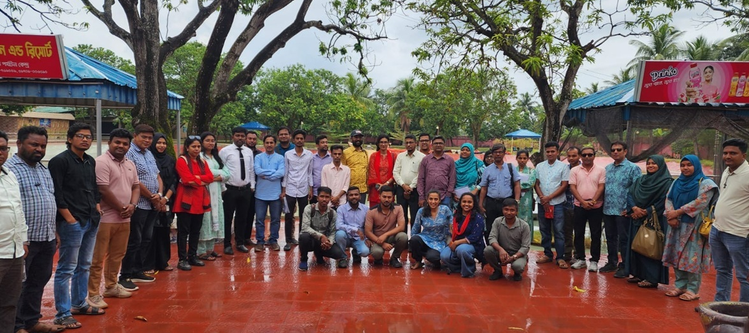
Abida Rahman: A three-day journalism workshop focusing on climate-induced non-economic loss and damage concluded in Satkhira on Thursday (October 29), highlighting how climate change affects coastal communities beyond financial losses, particularly their cultural heritage, traditional ways of life, social identities, and mental well-being.
Organized by the Earth Journalism Network (EJN), the workshop began on October 27 at Muzaffar Garden and Resort in Satkhira. A total of 44 journalists, media professionals, and freelancers from Dhaka, Chattogram, Cox’s Bazar, Khulna, Bagerhat, Jashore, and Satkhira participated in the event.
The workshop aimed to strengthen journalists’ understanding of non-economic loss and damage associated with climate change and encourage deeper reporting on its effects on vulnerable communities.
During the sessions, Joydeep Gupta, former Editor-at-Large of The Third Pole and Manager of EJN’s India Program, explained the concept of climate-induced non-economic loss and damage and its relevance to climate journalism.
Renowned playwright and researcher Dr. Simon Zakaria discussed the impacts of climate change on the languages, cultural traditions, and festivals of marginalized communities, emphasizing the importance of documenting these often-overlooked consequences.
Mental health expert Md. Mojahid explored the physical and psychological impacts of climate change, while senior journalists Pinaki Roy shared their professional experiences in reporting on environmental and climate change issues in Bangladesh.
On the second day, participants visited Munda communities and fishing villages in the coastal areas of Shyamnagar upazila in Satkhira.
During the field visit, journalists interacted with local residents to better understand the challenges faced by coastal communities and observe how climate-related changes are affecting their everyday lives, traditional practices, and well-being.
On the final day, Ritu Gupta of the Climate Justice Resilience Fund discussed the importance of integrating gender perspectives into journalism on climate-related non-economic loss and damage.
The workshop concluded with participants developing reporting action plans focused on identifying and documenting non-economic losses and damages associated with climate change.
The concluding session was facilitated by Manasi Pinto, Senior Program Associate at EJN, and Shameem Ara Sheuli, EJN’s Bangladesh Coordinator.
The three-day initiative provided participating journalists with an opportunity to explore climate change impacts beyond measurable economic losses and develop story ideas highlighting the human, cultural, and psychological dimensions of the climate crisis.





Leave a Reply